
How To Quit Your Job Without Burning Down Your Career
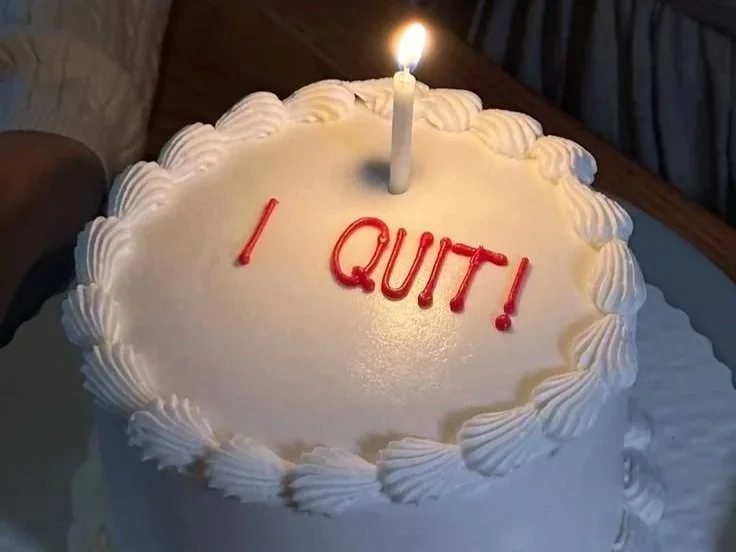
Or… a guide for marketers, social media managers, fashion people and e-commerce workers who have drafted their resignation speech 47 times in Notes.
There comes a point in every career when you realise it's time to go. Maybe you've accepted a new role. Maybe you've been passed over for a promotion. Maybe you've been told to "circle back" so many times you're starting to feel like a boomerang. Maybe you've realised crying in a bathroom stall isn't exactly what you imagined having a career would feel like.
Whatever the reason, quitting your job is one of those career moments nobody really teaches you how to do. And Darren from that LinkedIn article with 17 likes and a stock image of two people shaking hands? Respectfully, what does he know about the very specific panic of your boss just returning from parental leave, your annual leave being booked six months ago, and trying to figure out the least inconvenient moment to say, "Hey, I'm leaving."
We've all been there. Especially if you work in marketing, fashion, social media or e-commerce across Australia and New Zealand, where everyone somehow knows everyone and LinkedIn feels less like a professional network and more like a school reunion.
The good news? You can leave professionally, protect your reputation and avoid becoming the cautionary tale told during onboarding. Here's how.
A quick legal note: Every workplace is different. Before resigning, make sure you check your employment contract, company policies and any relevant employment laws, as requirements and obligations can vary depending on your circumstances.
Step 1: Make Sure You're Actually Ready To Quit
Before you dramatically update your LinkedIn headline, ask yourself:
Have I signed a contract for my new role?
Have I confirmed my start date?
Have I checked my notice period?
Have I thought through my finances?
Am I leaving because this role isn't right, or because I had a bad Tuesday?
Let's start with the first one. Do not resign until you've signed a contract.
A verbal offer is exciting.
A written offer is better.
A signed contract is best.
You'd be surprised how many people resign assuming everything is locked in, only to discover there are still approvals, references or paperwork outstanding. You don't need a five-year plan, but you do need a next step. Career decisions made during a 10pm spiral are rarely your best work. Everyone knows you need at least one night's sleep before deciding whether you're quitting your job or just hungry.
Step 2: Read Your Contract (No, Really)
Before you resign, read your employment contract. Not skim it. Not search for the words "notice period" and call it a day. Actually read it.
Employment obligations differ across Australia and New Zealand, and may differ further depending on your industry, award, enterprise agreement or individual employment agreement. If you're reading this from another market, your requirements may be completely different.
Before resigning, check:
Your notice period
Annual leave balance
Bonus or commission eligibility
Restraint or non-compete clauses
Company equipment requirements
Garden leave provisions
Any repayment obligations for training or relocation
If you're in Australia
Many employees will have a notice period outlined in their employment contract, while others may also be covered by a Modern Award or Enterprise Agreement. A common notice period is between two and four weeks, although senior roles may require longer.
If you're in New Zealand
Notice periods are generally outlined in your employment agreement. Unlike Australia, there isn't a universal minimum notice period for employees resigning, so what you've agreed to in your contract is particularly important.
Step 3: Do The Maths Before You Hand In Your Notice
This is the least sexy part of resigning and arguably the most important. Before you quit, work out:
When your final pay will land
Whether annual leave will be paid out
Whether you're entitled to any bonuses or commissions
When your new employer's payroll cycle starts
Whether you'll have a gap between payments
Because there is a uniquely humbling experience that happens when you leave one job on the 30th, start your new role on the 1st and then discover your new company's payroll only runs once a month.
Congratulations. You are now the proud owner of approximately eight weeks between pay cheques. Nothing makes a free week between jobs feel less relaxing than opening your banking app and realising you've accidentally scheduled yourself a financial detox. Future-you will be grateful you checked.
One more thing. Your notice period and your actual final day aren't always the same thing. Some employers will happily have you work through your entire notice period. Others may decide they'd rather wrap things up sooner. This is particularly common in industries where employees have access to confidential information, commercial strategy, financial data, client relationships or future business plans.
Ahem. Big Tech.
In some cases, you may be asked to stop working immediately while still being paid through your notice period. In others, your access may be removed the same day you resign. Don't panic if this happens. It doesn't automatically mean you've done something wrong. Sometimes it's simply risk management.
Step 4: Stop Overthinking The Timing
This section is specifically for the people who are currently thinking:
"My manager just came back from parental leave."
"We've got a huge campaign launching next month."
"I've got annual leave booked."
"What if I completely blindside them?"
First of all: welcome. Second of all: you're not alone. If you're thinking about leaving, it can help to start having honest conversations about your workload, growth opportunities or long-term goals before you resign. Not because you owe anyone a warning. You don't. But if you're someone who would rather avoid the emotional equivalent of dropping a resignation letter on your manager's desk and immediately disappearing into the night, a little runway can make the conversation feel less abrupt.
Maybe that's:
Talking about wanting more responsibility
Mentioning you're unsure whether the role is the right long-term fit
Discussing career progression
Being transparent that you're feeling disengaged
That said, let's be very clear: You are not responsible for managing your employer's feelings about your resignation. People leave jobs every day. A resignation should never be treated as a personal betrayal. You don't need to spend six months softly launching your departure like it's a relationship breakup.
Step 5: Resign Like An Adult (A Meeting First, Always)
Your manager should hear the news from you directly.
Not via Slack.
Not via Teams.
Not because your LinkedIn suddenly says "Open To Work".
And definitely not because you've been quiet quitting so aggressively that everyone already assumed you'd left.
Whenever possible, resign in person. If you're remote, schedule a video call. If neither option is possible, a phone call is your next best option.
Will it feel awkward? Absolutely.
Is it still the right thing to do? Also yes. Think of it as ten minutes of discomfort in exchange for the immediate relief of not having to think about it anymore.
A simple script works:
"I'm calling to let you know I've accepted another opportunity and will be resigning from my position."
"I've genuinely appreciated my time here and the opportunity to be part of the team."
"Let me know when you'd like to discuss next steps and the transition plan."
You don't need a TED Talk. You don't need a PowerPoint presentation and you don't need to explain every reason you've ever been unhappy. While it may be tempting to finally unload every complaint you've collected since 2023, we'd strongly recommend against it. Future-you may need a reference.
Step 6: Keep The Resignation Letter Boring af
This is not the place for a manifesto. Your resignation letter should be approximately as exciting as a terms and conditions page.
Include:
Your intention to resign
Your final date
A thank you
That's it. The most powerful resignation letters are usually the shortest ones.
Like…
Dear [Manager's Name],
Please accept this letter as formal notice of my resignation from my position as [Job Title] at [Company Name].
In accordance with my notice period, my final day of employment will be [Date].
Thank you for the opportunity to be part of the team and for the experience and support during my time here. I appreciate everything I've learned and wish the business continued success.
Best,
[Your Name]
Step 7: Don't Turn Your Exit Interview Into A Podcast
If you're offered an exit interview, we'd generally recommend taking it. Not because it's your chance to deliver a dramatic closing statement. Because it's one of the few opportunities you'll have to provide feedback that might actually be heard.
Remember:
Exit interviews are for information gathering, not revenge.
You can be honest without being explosive.
You can be constructive without becoming the whistleblower in a Netflix documentary.
If there's any chance you'll work at this company again… or with these people again… we'd avoid burning the place to the ground on your way out.
Step 8: The Marketing, Fashion & Social Industry Is Basically One Big Group Chat
This industry is smaller than you think.
That PR Coordinator becomes a Brand Manager.
That Social Media Coordinator launches an agency.
That E-commerce Assistant becomes Head of Growth.
That freelancer you worked with on a campaign somehow ends up sitting across from you in a pitch meeting three years later.
Leave every role assuming you'll work with these people again. Because statistically, you probably will. A reputation takes years to build and approximately one chaotic resignation to damage.
Step 9: Actually Handover Your Work
Nobody enjoys writing handover notes. Everybody appreciates receiving them. A good handover is one of the most underrated career moves you can make. It's the difference between people saying, "Wow, they left everything in great shape" and "What exactly did they do all day?". And if you aren’t picking up what we’re putting down, read the last section again.
Document:
Current projects
Key contacts
Upcoming deadlines
Campaign status
Reporting processes
Password and access procedures
Anything currently living exclusively inside your brain
Step 10: Stay Connected
Before you leave:
Connect with colleagues on LinkedIn
Save personal contact details
Thank mentors
Send farewell messages
Stay in touch with people you'd genuinely like to work with again
Think about who could be a future referee
And if you've had a great relationship with your manager? Ask for a reference letter.
Trying to track down your boss from five years ago because a new employer wants a reference is a deeply humbling experience.
Frequently Asked Questions
-
The amount of notice you need to give will usually be outlined in your employment contract. Some employees may also be covered by a Modern Award or Enterprise Agreement, which can affect notice requirements. Four weeks (for full-time) is common across marketing, fashion, social media and e-commerce roles, but always check your individual contract before resigning.
-
Your notice period should be outlined in your employment agreement. Unlike Australia, there is no universal notice period that applies to all employees, so it's important to check what you've agreed to in writing. Most professional roles will require anywhere from two to six weeks' notice, although senior positions may require longer.
-
Sometimes, yes.
However, if your contract requires a notice period, resigning immediately could put you in breach of your employment agreement. There are situations where employees leave immediately due to health, safety or other serious concerns, but if you're unsure, it's worth seeking professional advice before making the call.
-
Yes.
In some industries, particularly those involving confidential information, commercial strategy, client relationships or financial data, employers may choose to end your active employment immediately after you resign.
This is often referred to as garden leave. In many cases, you'll still be paid for your notice period, even though you're no longer required to work.
Don't take it personally.
Sometimes the company is simply protecting sensitive information. Sometimes they don't want you accidentally downloading next quarter's strategy deck on your way out.
-
In most cases, yes.
Employees in Australia are generally entitled to be paid out for accrued but unused annual leave when their employment ends. Employees in New Zealand are also typically entitled to payment for accrued annual holidays and other applicable leave entitlements.
Your final payout will depend on your individual circumstances, employment agreement and local employment laws.
-
This varies between employers.
Some businesses process final pay on the next scheduled payroll date, while others process it separately after your employment ends.
Before resigning, it's worth confirming:
When your final pay will be processed
When annual leave payouts will be paid
Whether bonuses or commissions will be included
Whether your new employer's payroll cycle aligns with your start date
Nothing ruins the excitement of a new job quite like accidentally creating a six-week gap between pay cheques.
-
Not necessarily.
If your concerns relate to workload, career progression, support or development opportunities, it's often worth raising them before deciding to leave. Sometimes issues can be resolved.
However, you are not responsible for preparing your manager for your resignation.
People leave jobs every day.
A resignation should never be treated as a personal betrayal or a surprise that a business couldn't possibly have anticipated.
-
Proceed with caution.
A pay rise, promotion or new title can be tempting when it arrives immediately after you've resigned. But before accepting a counteroffer, ask yourself why the changes weren't offered before you handed in your notice.
If the reasons you wanted to leave were deeper than salary, such as culture, leadership, workload or career progression, a higher pay cheque may not solve the problem.
Counteroffers can work, but they should be assessed carefully rather than accepted out of guilt or panic.
-
Not always, but it's a good idea to think ahead.
If you've had a positive relationship with your manager, consider asking for a LinkedIn recommendation, written reference letter or permission to use them as a referee in future.
Trust us.
Trying to track down a manager from five years ago because a recruiter wants a reference is a uniquely annoying not to mention sometimes awkward administrative task.
